A fire department's apparatus is its single biggest capital investment and the thing that has to start on the worst night of someone's year. Tracking specs, maintenance, and readiness in a binder or a spreadsheet works right up until it doesn't. 911 Analytics keeps every rig's record in one place, connected to the run reports and ratings that depend on it.
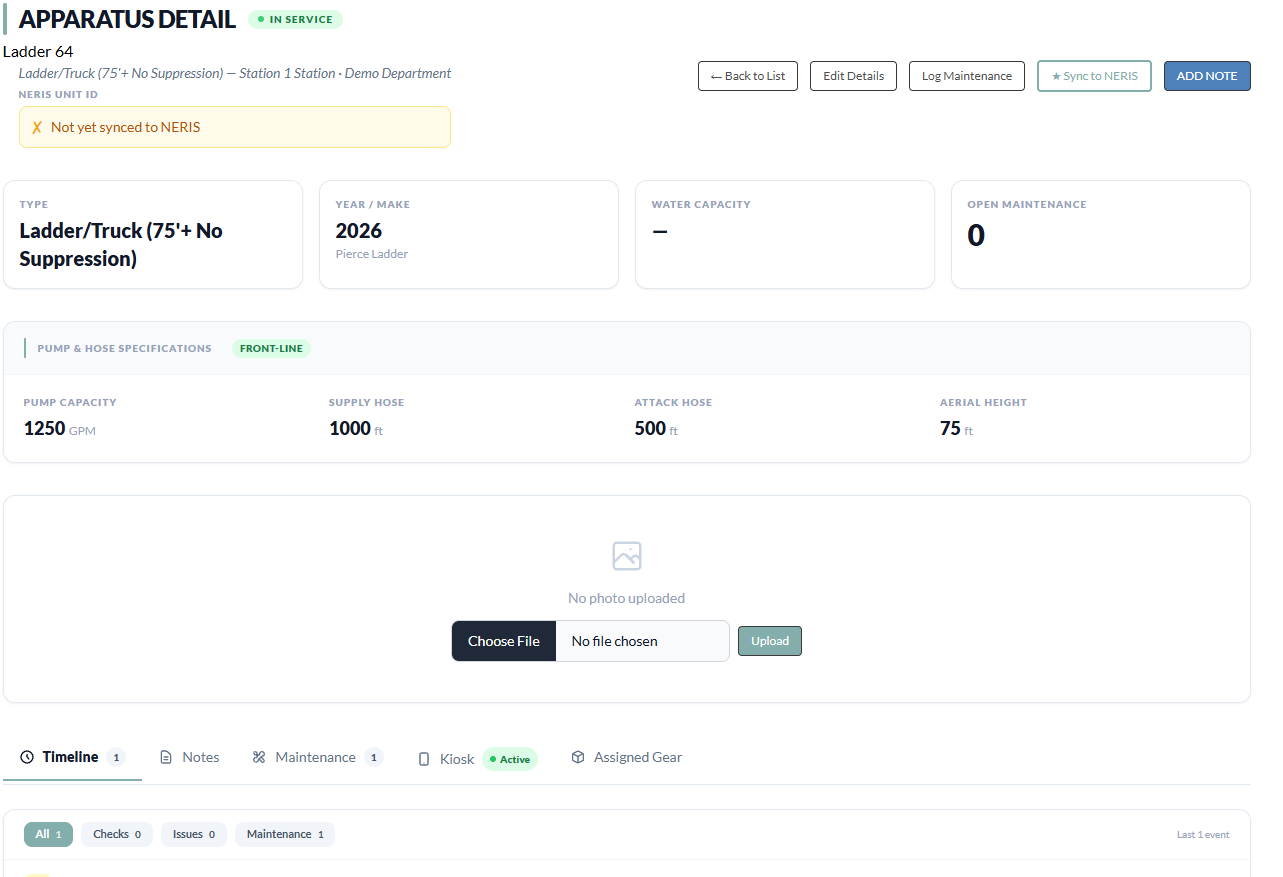
Specs that match the standards
Each apparatus carries the detail that matters operationally and for compliance — type and classification, year and make, pump capacity, supply and attack hose, aerial height, and water capacity. Front-line and reserve status is clear at a glance, and the fields line up with the apparatus specifications NERIS and NFPA care about.
- Pump capacity, supply hose, attack hose, and aerial height
- Type, classification, year, and make
- Front-line vs. reserve designation
- NERIS unit ID and sync status per rig
Maintenance you can actually see
Every unit has a maintenance timeline and a running open-maintenance count, so nothing falls through the cracks. Log service, track what's outstanding, and see an apparatus's full history in one scroll. When a rig needs to come out of service, its status reflects that everywhere it appears — including the run report, so crews don't assign a unit that isn't ready.
Readiness flows everywhere. Apparatus status, specs, and assignments connect to the live response view and run reporting — seat assignments, first-arriving unit, and apparatus GPS all draw from the same records, so the rig data you maintain once shows up wherever it's needed.
Checks, notes, and assigned gear
Beyond maintenance, each apparatus carries its daily and weekly checks, free-text notes, kiosk activity, and the gear assigned to it — a complete operational picture per unit. For a department managing readiness across several rigs and stations, it replaces the scattered binders with one record that everyone can see and trust.
Part of the whole platform
Apparatus management isn't a standalone module — it's wired into run reporting, the ISO/FSRS rating estimate, the response kiosk, and NERIS submission. Built by a volunteer firefighter for volunteer and combination departments, at flat pricing with no per-seat fees.